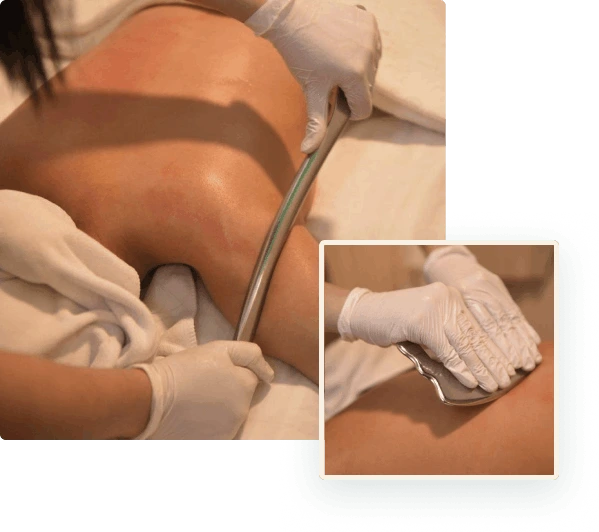
Acupressure Massage
What Is Acupressure?
Acupressure is a practical healing technique that helps reduce pain and relieve muscle tension. Practitioners perform acupressure by using their fingers to apply constant pressure to specific points on the body to relieve pain and relax muscles. At Qi Health, therapists use acupressure on trigger points located in muscles and soft tissues. Trigger points form at the neuromuscular junction where nerves and muscles connect and become inflamed. This sensitive area often causes pain when someone presses on it and can also cause muscle spasms. When therapists use acupressure techniques, they help reduce discomfort by blocking pain signals going to the brain and encouraging the body to relax deeply.
How Acupressure Works
Researchers are still studying how acupuncture and acupressure affect the body, but strong scientific findings show that these traditional methods can support health and well-being.
In traditional Chinese medicine, practitioners describe the body as having a network of meridians, which act as invisible pathways. Energy, known as “qi” (pronounced “chee”), flows through these pathways. When something blocks that flow, it creates a blockage, like heavy traffic on a road.
The concept behind acupressure focuses on stimulating specific “acupoints.” When you press on these points, you help release the blockage so that energy can flow freely through the body again.
At Qi Health, practitioners typically perform acupressure with their fingers, especially the thumbs. “You just use your fingers to apply firm, steady pressure to a specific point,” Scott explains.
What Is Acupressure Used For?
Many people use acupressure to help manage certain conditions, such as:
- Insomnia
- Stress relief and relaxation
- Headaches
- Menstrual cramps
- Pregnancy discomfort
- Muscle cramps and body aches7
- Nausea and vomiting during pregnancy, including morning sickness
- Nausea and vomiting after surgery or chemotherapy
Some research also shows that acupuncture in the ear (auricle) may help reduce cancer-related fatigue, a common problem for people undergoing chemotherapy.
At Qi Health, practitioners often recommend acupressure as a supportive wellness approach to help restore balance to the body and improve overall well-being.
Potential Benefits of Acupressure
Acupressure helps relieve physical discomfort and also calms the mind. Researchers are continuing to study how effective acupressure is, but experts like Scott point out that practicing acupressure safely can help with overall well-being.
“It helps people feel like they have some control over their own health. Many people feel good knowing that they are actively doing something to reduce their symptoms,” she explains.
Acupressure can help relieve the following symptoms:
- Concussions and allergies: Anyone who suffers from allergies or sinus pressure knows the feeling of heaviness in the head. According to Scott, stimulating specific pressure points around the face and body can help open blocked passages, reduce anxiety, and support healthy eye and nasal passages.
- Stress and anxiety: Many people turn to acupressure to manage everyday stress and anxious feelings. Applying gentle pressure to points on the wrists, forehead, and chest area can help with relaxation. Many individuals incorporate these techniques into their meditation routines to help calm the nervous system.
- Digestive issues: Activating specific acupressure points can help relieve digestive issues such as constipation, gas, or bloating.
- Sleep issues: Applying specific pressure points before bedtime can help relax the body and mind. A randomized study showed that breast cancer patients improved their sleep quality when they received acupuncture and acupressure along with their standard medical care.
Overall, Scott emphasizes that acupressure works best when people use it in conjunction with other treatments and healthy lifestyle practices recommended by Qi Health.
FAQs: People Also Ask
Q1. Does acupressure really work?
Many people find that acupressure helps relieve stress, reduce stress levels, and improve overall well-being. With consistent practice, people often experience benefits that become more noticeable over time through the Qi Health methods.
Q2. Is acupressure massage safe?
Acupressure massage is generally safe when you apply gentle and appropriate pressure. If you have a medical condition, you should avoid applying too much pressure and seek the advice of a professional, such as the experts at Qi Health.
Q3. What are the side effects of acupressure massage?
Side effects are rare, but some people may experience some pain, tenderness, or fatigue, especially when they first start sessions or apply more pressure than recommended.