
Key Takeaways
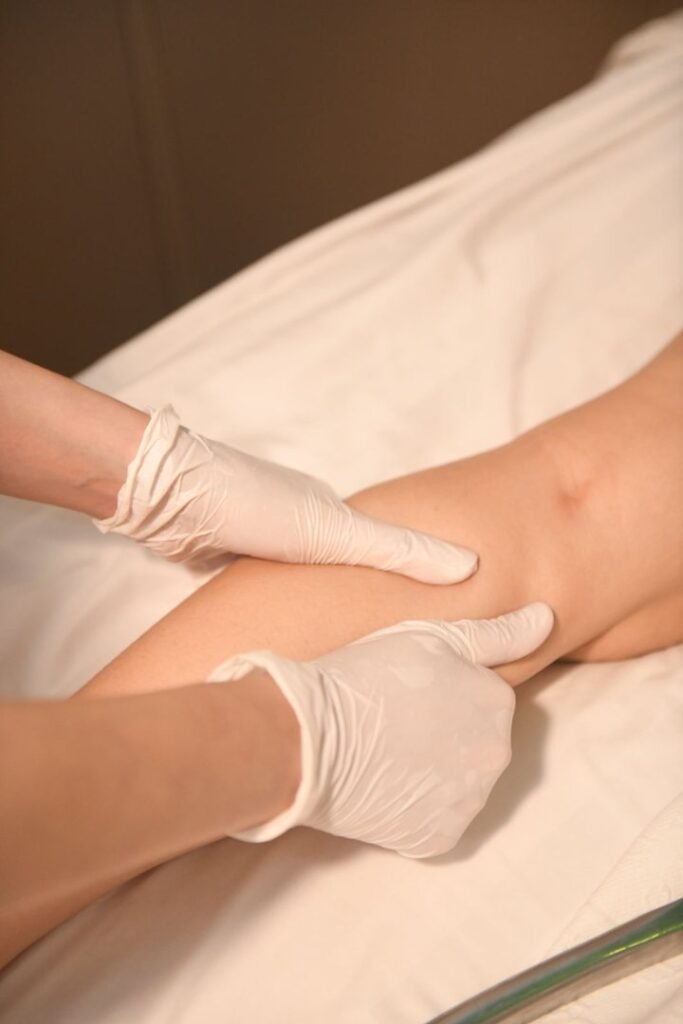
- Gua sha and fascia knife massage both use tools along the body’s meridian channels, but they work on different tissue layers and serve different purposes.
- Gua sha stimulates surface circulation, reduces inflammation, and promotes lymphatic drainage through broad scraping strokes.
- The fascia knife treatment, also called Jin Mo Dao, targets deeper fascial adhesions and muscle knots, making it suited for chronic tension and restricted movement.
- Bojin sits between the two: more precise than gua sha, gentler than the fascia knife approach, and focused on meridian-channel acupressure rather than structural fascial release.
- Choosing between these treatments depends on your physical condition, your sensitivity, and what outcome you’re looking for.
Introduction
Most likely, you have heard of Gua Sha before. Perhaps, you’ve seen the tool in a facial skincare video or a friend recommended you to give this treatment a try after a rough week. However, if you recently have been to a wellness spa inspired by TCM techniques in Singapore, you might have noticed another type of therapy called fascia knife treatment or Jin Mo Dao.
Despite their differences in technique, effect, and target zones, most of those seeking relaxation from soreness in their necks, backs, and poor blood circulation cannot distinguish which procedure to choose since they want more than just a regular massage. This uncertainty can be partially explained by the way the procedures are described by their practitioners. While they will all talk about relieving the tension, improving blood circulation and deep tissue massage, in reality, these practices have different tools, target tissue, and wellness outcomes.
The increasing popularity of gua sha and fascia knife massage therapies is due to the rapid growth of the global wellness industry. According to statistics provided by the wellness market in recent years, the industry doubled in size since 2013 and increased by 7.9% from 2023 to 2024 with a total value of $6.8 trillion.
This guide will help you to find the answer to the question of what makes these two different. You will learn about each therapy, their common points and peculiarities, and will be able to figure out which therapy is more suitable for your body depending on its characteristics and needs.
What is Fascia Knife Massage?
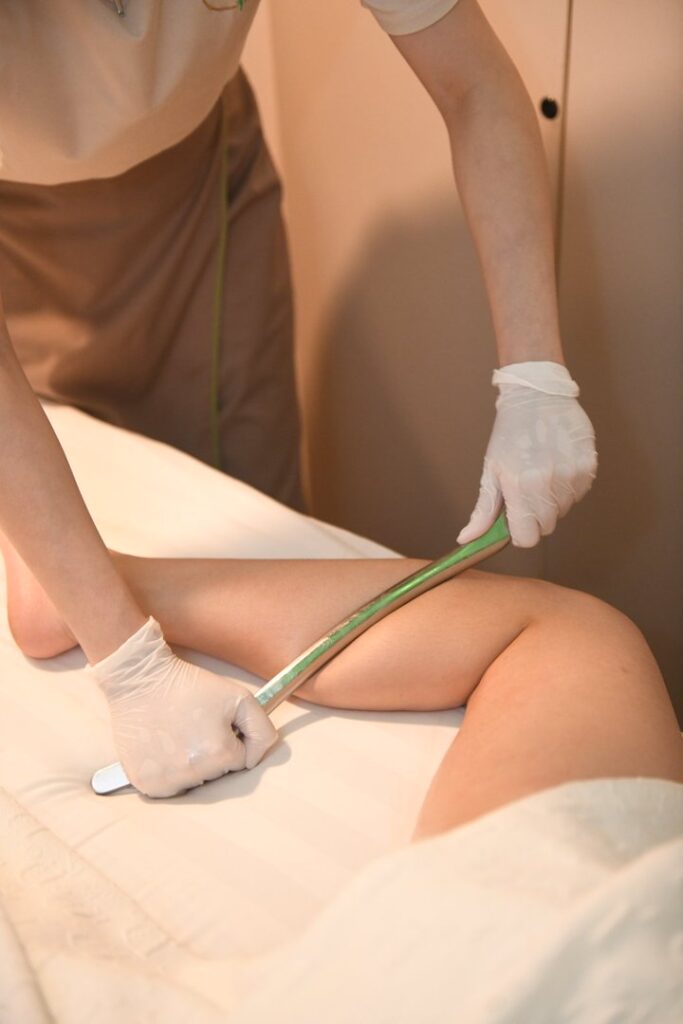
The use of the fascia knife massage, also known as Jin Mo Dao (筋膜刀)in Traditional Chinese Medicine, is an equipment-based massage therapy that aims to help in releasing fascial adhesions and in regaining the natural range of motion of the body. Specific equipment with different kinds of blades are used for pressing and gliding against tight muscles and meridians.
The objective of this practice is to target and release the palpable knots within the muscles, connective tissues, and any other factors which may inhibit the body’s movement.
The fascia refers to the connective tissue that envelopes the entire muscle of the body. In the case where this connective tissue gets tight and stuck due to various reasons such as overexertion, poor posture, and injuries, then pain will occur and not be resolved with rest only. This is what makes Jin Mo Dao distinct from other messages.
How Gua Sha Works and What It’s Good For?
Gua sha has been practised in Traditional Chinese Medicine for centuries. The word “gua” means to scrape, while “sha” refers to the reddish marks, known as petechiae, that may appear after treatment.
These marks:
- Are not bruises
- Reflect stagnation clearing from beneath the surface
- Usually fade within a few days
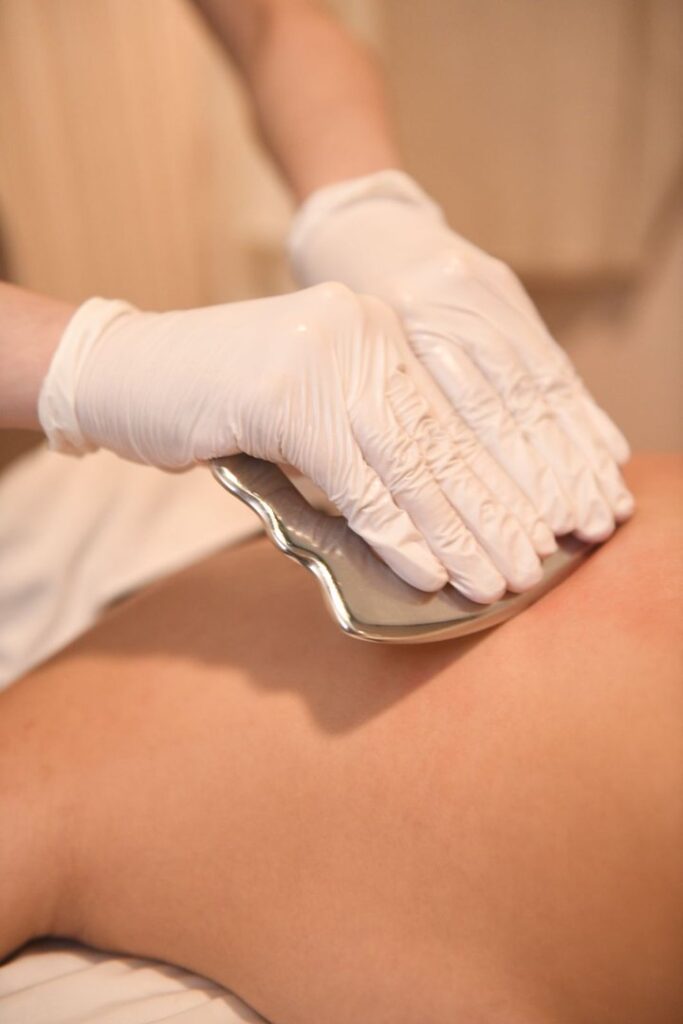
During a session, a smooth-edged tool made of jade, rose quartz, or water buffalo horn is applied to oiled skin. The therapist uses firm, unidirectional strokes along muscle groups and meridian lines to stimulate circulation and release tension.
The treatment process involves:
- Firm scraping strokes
- Movements along meridian pathways
- Strokes spanning four to six inches
These movements help:
- Encourage blood flow
- Support lymphatic drainage
- Release surface-level muscle tension
A 2025 randomised controlled trial published in PMC compared gua sha and facial roller techniques over an eight-week period. The scraping group recorded measurable improvements in facial contour measurements, skin elasticity, and muscle tone.
The study reported:
- Reductions of 2.23 mm to 2.40 mm across key facial surface distances
- Improvements in skin elasticity
- Improvements in muscle tone
Although the research focused on facial applications, the same mechanism applies to body treatments through stimulation of tissue layers beneath the skin to support circulation and structural change.
Gua sha is commonly suited for:
- General fatigue
- Dull skin
- Mild inflammation
- Surface-level muscle tension
The treatment is also considered:
- A gentler starting point for people new to TCM-based bodywork.
- A maintenance treatment between deeper therapy sessions.
At Qi Health, Gua sha is available alongside Bojin as part of the Gua sha and Bojin treatment offering for facial treatments, and body treatments.
“The scraping motion of Gua sha works on the skin, connective tissue, lymphatic system, and muscles simultaneously, making it one of the more wide-reaching external TCM therapies available.”
How the Fascia Knife Treatment Works and What Makes It Different?
The Jin Mo Dao approach takes a more targeted angle. Therapists begin by scanning the tissue with a C-shaped tool to locate areas of fascial adhesion and palpable nodules.
Tool selection depends on the affected area:
- Smaller tools are used for the neck and narrower muscle groups.
- Larger tools are used for the broad muscles of the back and shoulders.
Before the session begins, coupling gel is applied to the treatment area. The therapist then works methodically through the affected muscles using controlled pressure to release myofascial restrictions.
This treatment approach is particularly suited for:
- Recurring tension in the same area
- Deep muscular knots
- Long-term movement restriction
- Chronic tightness that does not resolve through surface treatments
For many people, this type of release addresses the root cause rather than just the symptom. One notable difference from gua sha is that the fascia knife treatment does not typically produce surface redness, and sha marks.
The tools work deeper into the tissue while the skin above remains largely undisturbed. This makes the treatment a practical option for people who prefer not to have visible post-treatment marks.
The sensation during treatment also differs from gua sha. Most people describe the experience as intense pressure rather than pain, particularly over areas with significant restriction.
During the session:
- Therapists adjust the treatment depth based on the body’s response.
- Communication throughout the session is encouraged.
- Pressure levels are modified according to sensitivity and tissue condition.
“The Jin Mo Dao technique works at the connective tissue layer rather than the skin surface, which is why it can address movement restrictions and deep knots that lighter treatments often miss.”
Where Bojin Fits Into the Picture?
Bojin is worth understanding because it bridges both approaches. Using specialised ox horn or jade tools, the treatment works along meridian lines and acupressure points to release tension in the fascia, tendons, and ligaments.
Bojin massage follows meridian pathways and can be applied to the face, back, and the head. The treatment uses:
- Precise pushing movements
- Prodding techniques
- Kneading motions
Unlike gua sha, Bojin does not rely on broad sweeping strokes. Unlike Jin Mo Dao massage, it does not use sustained deep myofascial pressure. This precision is what distinguishes Bojin from the other two treatments:
- It covers less surface area than Gua sha.
- It does not go as structurally deep as Jin Mo Dao massage.
- It reaches the meridian layer more accurately than either treatment.
Bojin is particularly well-suited for facial concerns such as:
- Reducing puffiness
- Lifting facial contours
- Releasing jaw tension
- Improving lymphatic drainage around the eyes
On the body, the treatment addresses:
- Shoulder channel dampness
- Back channel dampness
- Postural stiffness
- Recurring lower backache
- Uneven shoulders
The treatment also works along:
- The Small Intestine meridian
- The Bladder meridian
- The Triple Burner meridian
Clients experiencing recurring postural tension and long-term stiffness often respond well to this approach.
If gua sha functions as the broader circulation treatment and Jin Mo Dao works as the deeper structural release, Bojin sits between the two as a meridian-targeted therapy that remains gentle and pain-free throughout.
What the Two Treatments Share?
Despite their differences, both treatments are rooted in TCM’s meridian theory. This principle states that qi and blood flow through the body along defined pathways, and blockages within those pathways can lead to pain, stiffness, and reduced vitality. Both treatments use external stimulation along these meridian channels to restore smoother flow throughout the body.
Both approaches also rely on specialised tools rather than hands alone. This allows:
- More consistent pressure
- Better reach into specific tissue depths
- More targeted work along meridian pathways
Both treatments also require a skilled therapist who can:
- Read the body’s condition
- Identify the source of restriction
- Apply the appropriate technique without causing unnecessary discomfort
Another important point is that neither treatment follows a one-size-fits-all approach. Both sessions usually begin with some level of assessment or observation before the therapist decides on the technique and pressure level. A properly delivered TCM bodywork session responds to what the body is showing rather than applying the same fixed sequence to every client.
Which Treatment Fits Your Situation?
The clearest way to think about this is by what you’re currently experiencing, not by what sounds better on paper.
| Situation or Concern | Recommended Treatment | Why It May Be More Suitable? |
| Persistent neck stiffness, recurring shoulder tension, or chronic tightness that does not improve with stretching | Fascia Knife Massage | The issue may be sitting within the fascia rather than the muscle alone. Deep, tool-assisted release can help address long-standing restrictions after surface treatments have plateaued. |
| A spot on the back that repeatedly returns to tension | Fascia Knife Massage | The treatment targets deeper fascial adhesions and movement restrictions that may continue triggering recurring discomfort. |
| General fatigue, surface congestion, or early-stage muscle tension | Gua Sha | Gua sha works well for circulation support, lighter tension release, and overall body maintenance without requiring deep tissue pressure. |
| Facial wellness goals | Gua Sha | The treatment supports circulation, lymphatic drainage, and surface-level tension release while remaining gentler on the body. |
| People new to TCM-based bodywork | Gua Sha | It is generally considered a less intense starting point and responds well to regular lighter sessions. |
| Post-workout soreness that does not resolve easily | Fascia Knife Massage | A deeper myofascial approach can help release tension and restrictions that surface-level treatments may not fully address. |
| Recovery from movement-limiting injuries or recurring restrictions | Fascia Knife Massage | Deep tissue and fascial work may provide more practical relief for mobility-related concerns and repeated flare-ups. |
| Day-to-day stress and circulation support | Gua Sha | The scraping treatment provides steady, cumulative benefits without requiring deep structural work during every session. |
| Ongoing wellness maintenance between deeper treatments | Gua Sha | Many clients use Gua sha regularly as a maintenance treatment while reserving fascia knife sessions for more stubborn tension patterns. |
If you’re genuinely unsure which treatment suits your condition better, a therapist assessment before any session can remove the guesswork and help identify what is actually happening in the body before treatment begins.
Is Gua Sha or Fascia Knife Massage Better for Chronic Pain?
For the cases of musculoskeletal pain due to fascial restrictions and deep tissue tensions, the fascia knife procedure will be a better option. The techniques used in this procedure have access to the connective tissues, where most chronic pain syndromes start. In case of chronic inflammation, surface tension, or any kind of pain that benefits from circulation therapy, then Gua sha will be more suitable.
Most patients tend to get a combination of the two through the treatment process. A professional at Qi Health can assist you to choose an appropriate starting point depending on your history.
FAQs
- How is Gua sha different from fascia knife massage?
In Gua sha, one applies sweeping movements on the lubricated skin for stimulating circulation and lymphatic drainage. In fascia knife massage, specific instruments are used to go deep into the myofascial tissue by breaking down the adhesions and improving the range of motion. In the former case, you might have red patches on the skin in stagnation areas; in the latter case, there will be none.
- Is the fascia knife treatment painful?
The treatment will feel quite intense if you have any adhesion or restriction in those particular areas. Most people find it to be an application of strong pressure, rather than painful.
- How many sessions are required before I see any results?
This will depend on the duration of the restriction and your body’s response to it. An acute case may take 1-3 sessions. Chronic restrictions that developed over time should be addressed via four to six sessions, with evaluation between them in order to assess how you’re progressing. Your practitioner will most likely be able to tell you more after the first session, seeing your body’s response to the depth of the treatment.
- Is it possible to combine both during the same treatment period?
Yes, absolutely. A lot of clients get the scraping therapy for overall wellness and good circulation and schedule Jin Mo Dao sessions to address particular deep restrictions. Your Qi Health practitioner can provide recommendations on the proper combination depending on your goals.
- What is Bojin and how does it differ from the above two?
The Bojin massage involves the use of tools such as ox horns or jade to trigger specific meridian points and acupressure channels. It falls somewhere in the middle compared to the above two regarding its strength; Gua Sha covers wider areas on the surface, the fascia knife focuses on structural fascia adhesions while Bojin focuses on precise acupressure through the meridian pathway.
Conclusion
Both procedures are based on the same principles of TCM regarding the way the body retains and releases the tension. The only difference is that one procedure operates deeper while the other works on the surface tissues. It is easier for people to make the right choice between the two after knowing the difference.
At Qi Health in Singapore, we treat our patients according to their condition, not according to any specific technique. The health center has an array of services inspired by TCM. The list includes but is not limited to Gua Sha, Jin Mo Dao massage, Bojin, Tuina, Moxibustion, Head Spa therapy and Deep Tissue massage treatments in our all 3 Singapore branches.
All these treatments are aimed at improving circulation and body maintenance. With the proper therapy, an evaluation will be conducted regarding the state of the body before any decisions are made about the treatment, therefore, there is no need for technical know-how for the clients.
Qi Health also offers treatments that are appropriate for such conditions as muscle tension, poor posture, fatigue, poor circulation, puffiness of the face, and recurring muscle pain. Those who wish to read more about wellness can check out the Qi Health blog, which offers wellness tips and information.