Key Takeaways
- Bojin massage uses specialised tools to stimulate meridian channels and acupressure points, supporting energy flow, circulation, and emotional balance throughout the body.
- Fascia knife massage works deeper into the connective tissue to break down adhesions and restore range of motion in areas affected by chronic tension or restricted movement.
- Both treatments are rooted in Traditional Chinese Medicine but serve different primary goals: Bojin addresses energy and meridian balance; the fascia knife approach addresses structural fascial restriction.
- Your body type, pain history, and wellness goals determine which treatment fits better, and many clients use both at different stages of their care.
- As a body treatment in Singapore, Bojin is often the first choice for systemic maintenance; the fascia knife treatment is the reset when something stops resolving on its own.
Introduction
Any time you enter a TCM wellness spa in Singapore, you’ll be able to come across two types of therapy that will both be offered, Bojin and Jin Mo Dao. In the description, you’ll read that both are based on using tools, focusing on particular points in the body, and have their origins in Traditional Chinese Medicine. In addition to this, both types will appear to do pretty much the same.
Yet, they differ in many ways, particularly, in the very essence of these treatments, who they are designed for and how. As reported by WHO, there are more than 1.7 billion people suffering from musculoskeletal conditions around the world today, which makes neck stiffness, shoulder pain and lower back pain the most widespread problems for patients.
One thing that confuses many people when making their choice between these two treatments is the description of both of them. People involved in either will tell you of tension relief, deep tissue work, and improved blood circulation. These descriptions make it more difficult to distinguish between them. However, the equipment used is different, the tissue targeted is different, and the health benefit sought is different.
This blog is intended for those who have already settled on these two options and wish to have an informed decision based on facts. It is not just a glossary of terms and not just an overview of benefits, but rather a working template for choosing a suitable therapy.
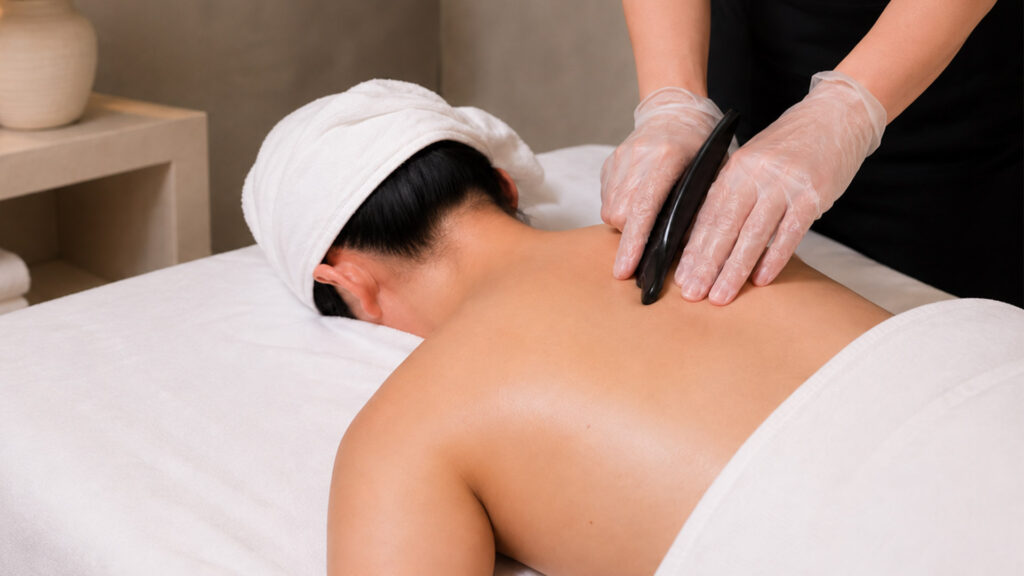
What is Bojin Massage?
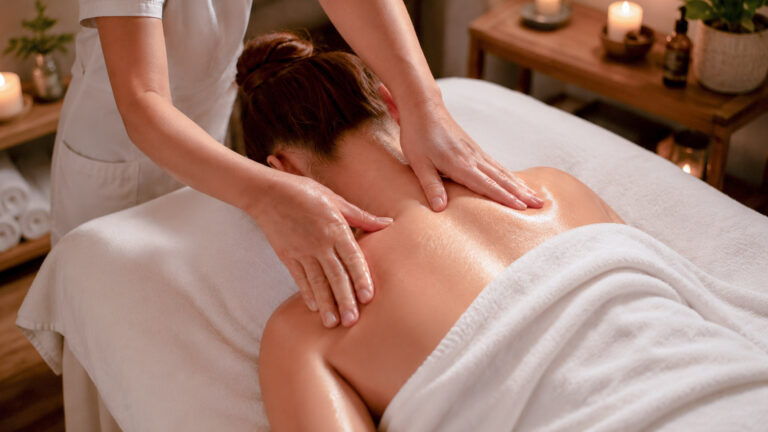
Bojin (撥筋) is a Traditional Chinese Medicine body treatment that uses specialised tools, typically crafted from ox horn or jade, to stimulate acupressure points and meridian channels throughout the body.
The therapist applies varying pressure and rhythm along the body’s energy pathways to:
- Release blockages
- Improve the flow of qi and blood
- Restore internal balance
The session starts with an evaluation of your physical history, after which the practitioner will select target areas and use therapeutic oils on them while working through the corresponding meridian channels systematically.
The therapy operates on a larger level, targeting the system of the body’s energy as opposed to a particular tissue or part. It allows for addressing a range of concerns at once, from chronic pain and muscle tension to emotional problems because all these areas are interlinked through the meridians. The effects that follow an improvement in the qi flow throughout the meridian system will be quite general rather than specific, and that’s why patients feel much more balanced after the therapy.
What Fascia Knife Massage Does Differently?
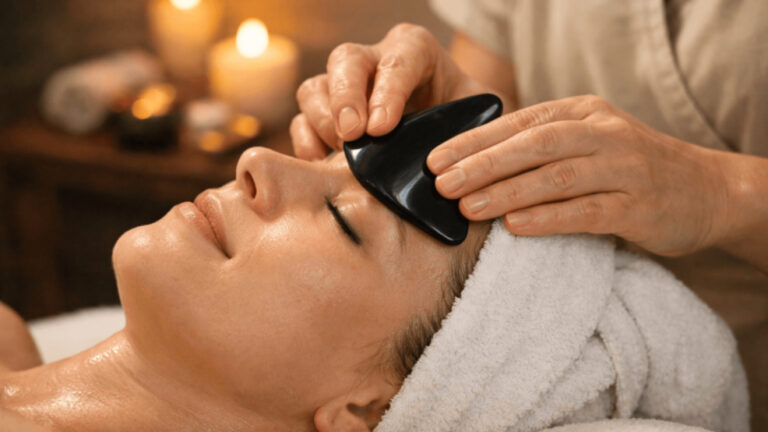
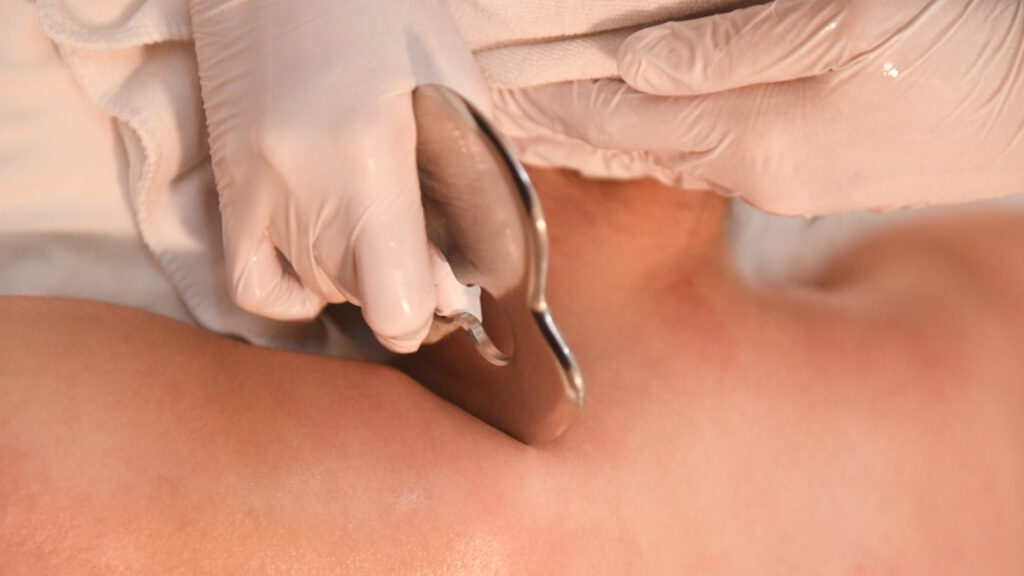
Fascia knife massage, known in TCM as Jin Mo Dao (筋膜刀), is a tool-assisted technique that targets the myofascial tissue layer. This is the web of connective tissue surrounding and supporting every muscle in the body.
When this tissue becomes restricted through overuse, injury, or poor postural habits, it can limit movement and generate pain that rest or standard massage will not fully resolve.
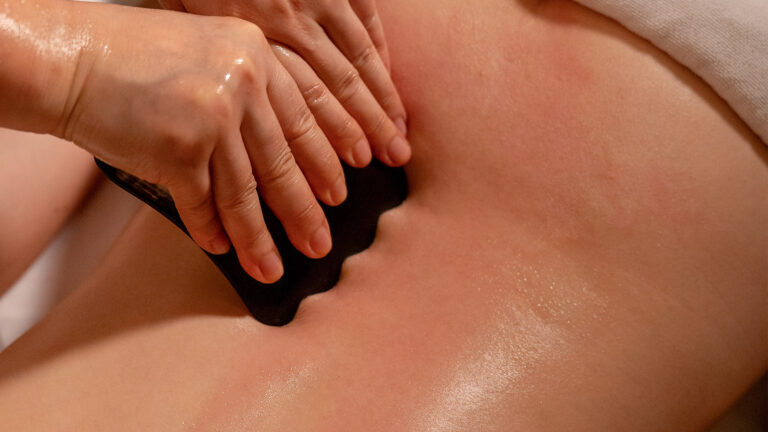
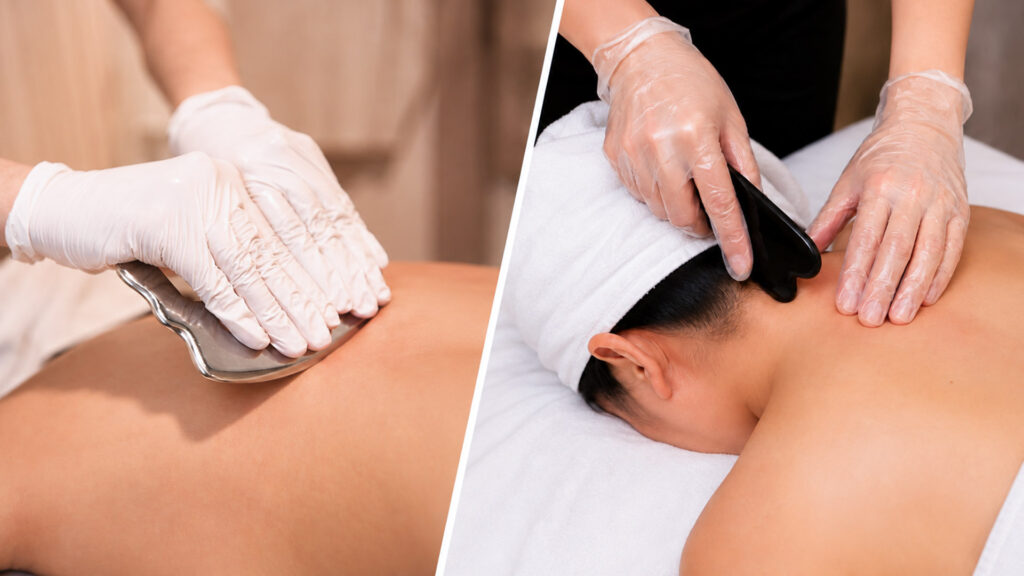
Practitioners use blade-shaped tools in varying sizes to scan for fascial adhesions and nodules before applying controlled pressure to release them. Typically:
- Smaller instruments are used for the neck and narrower muscle groups
- Larger tools are used for the broad muscles of the back and shoulders
Unlike Bojin, the treatment does not follow meridian lines in the same way. Its approach is structural:
- Find the restriction
- Release it
- Restore the tissue’s capacity to move freely
At Qi Health, the Fascia Knife (Jin Mo Dao) treatment is specifically designed to break down muscle adhesions and restore a full range of motion in areas where tension has become chronic and structurally embedded. More details on the full range of bodywork options are available on the Qi Health services.
The Wellness Goals That Separate Them
The fundamental difference between the two therapies comes down to the level of the body that will be worked upon. Whereas Bojin therapy involves opening up channels in the meridian system and balancing out the entire body, fascia knife massage targets restrictions at the physical level in the body’s connective tissues.
The clearest way to choose between these two treatments is to start with what you are trying to change, not with the treatments themselves.
When Bojin Fits Better?
| Situation or Wellness Goal | Why Bojin Fits Better? |
| Whole-body stress, recurring fatigue, or systemic tension | The treatment works at the level of the body’s energy system to address the whole pattern rather than just one symptom. |
| Stress appearing across the neck, shoulders, and lower back simultaneously | Bojin works through the meridian system to support overall balance throughout the body. |
| Restorative wellness support rather than corrective treatment | Practitioners associate the treatment with improved circulation, cleared dampness, better lymphatic drainage, and a sense of lightness after the session. |
| Clients managing fibromyalgia, chronic fatigue, or hormonal imbalance | Meridian stimulation supports the body’s own regulatory mechanisms, which is why many clients respond well to regular sessions. |
| Emotional stress alongside physical tension | In TCM, the free flow of qi through the meridians is linked to mood regulation and mental clarity in addition to physical wellness. |
| Long-term wellness maintenance | Many clients continue regular sessions because the treatment supports ongoing circulation, energy flow, and systemic balance. |
“Bojin works along the body’s meridian network to restore energy flow, ease chronic tension, and support the body’s natural capacity to regulate and heal.”
When the Fascia Knife Treatment Fits Better?
| Situation or Wellness Goal | Why Fascia Knife Massage Fits Better? |
| A specific, localised restriction | The treatment targets structural fascial restrictions rather than systemic energy imbalance. |
| Recurring tight spots or limited neck rotation | The approach works directly on connective tissue restrictions that stretching or lighter therapies may not fully resolve. |
| Post-workout stiffness that remains beyond 48 hours | Deep myofascial release helps address chronic muscular restriction and tissue adhesions. |
| Desk workers and athletes with persistent musculoskeletal tension | A 2025 study published in Frontiers in Public Health reported measurable improvements in pain levels, cervical muscle endurance, and neck disability index scores among athletes receiving fascia knife release therapy over 12 weeks. |
| Chronic stiffness that has not responded to lighter treatments | The treatment works at the structural layer where the restriction exists rather than only improving surface circulation. |
| Long-standing fascial adhesions and movement restriction | The technique focuses on releasing deep connective tissue restrictions and restoring freer movement. |
“The fascia knife technique targets the myofascial tissue directly, addressing chronic restrictions that sit too deep for surface-level or circulation-based treatments to reach.”
Clients in Singapore choose either of these therapies depending on their needs and the specific issue that they have, whether it is systemic tension, emotional fatigue, stiffness or restriction. An initial evaluation by the therapist will determine which one will be most suitable for the body.
What the Two Treatments Have in Common?
Both treatments use tools rather than hands alone. Tool-assisted work provides:
- More consistent pressure
- Better access to specific tissue depths
- More precise work along targeted pathways than finger pressure typically allows
Both treatments are also grounded in TCM principles.Despite different ways of achieving their goals, both methods rely on the same belief that unobstructed movement in one’s body channels is conducive to good health and comfort.
This shared foundation is why the two treatments complement rather than compete with each other:
- One works on the meridian channel
- The other works on the connective tissue
- Both move toward the same outcome of free and unobstructed physical function
Both treatments also work best when the therapist has a proper understanding of the body’s condition before the session begins. Neither treatment follows a fixed protocol applied identically to every client.
Instead, the treatment approach adapts according to:
- The body’s condition on the day
- The location of restriction
- The depth of tension
- The client’s physical response during the session
In practice, choosing the right spa treatment comes down to matching the treatment approach to the body’s current condition rather than following a standardised sequence.
How Your Body History Guides the Decision?
Your history with tension and pain often points directly to which treatment suits you better right now. If your body tends to accumulate:
- Generalised stress
- Stiffness in several places at once
- Sluggish energy levels
- Poor circulation
Bojin addresses the underlying systemic pattern rather than a single localised issue. Many clients who include Bojin regularly in their wellness routine in Singapore describe the treatment as a reset that prevents the body from reaching the point of locked-up tension in the first place.
For ongoing maintenance:
- A session every two to four weeks helps keep the meridian channels clear.
- Regular sessions help prevent deep stagnation that may otherwise require multiple treatments to resolve.
- Consistent treatment tends to produce better long-term results than occasional sessions.
If you have these, fascia knife massage is usually the more targeted option:
- A specific localised restriction
- Tension present for weeks or months
- Recurring stiffness that has not improved with lighter treatments
The treatment is commonly suited for:
- Post-injury recovery
- Recurring athletic tension
- Postural problems causing repeated pain in the same area
Depending on how long the restriction has been present, four to six sessions with reassessment between treatments is a common treatment course. Some clients also use both treatments together. In this combined approach:
- A series of Jin Mo Dao sessions addresses the deep structural restriction first.
- Regular Bojin sessions maintain energy flow and tissue health between treatments.
This combination provides:
- Deep structural release
- Ongoing systemic support
- Better support for people managing both chronic tension and generalised energy fatigue at the same time

Is Bojin Massage Right for Your Wellness Needs?
Bojin is suitable for individuals with general body tension which may be persistent or related to the flow of energy and harmony of the system rather than just one structural tension. It is a non-painful modality that operates through the meridians and helps with circulation, relaxation from mental stress and weightlessness of the body.
Clients often say that Bojin is the treatment which finally deals with the underlying pattern instead of dealing with the flare-up. For those people who need an ongoing treatment wellness program in Singapore which can be maintained consistently, Bojin is a great choice.
FAQs
- What is the distinction between Bojin massage and fascia knife massage?
The Bojin technique acts upon the meridians and points of pressure in the body to ensure energy balance and improve systemic relaxation. The fascia knife works specifically on the myofascial connective tissue layer that requires breakdown of adhesions to restore mobility in the joints. Both techniques employ equipment, yet they have different objectives and mechanisms.
- Is a Bojin massage painful?
Bojin massage is not a painful procedure. The practitioner uses variable levels of pressure through ox horn and jade instruments in the meridians of the body. However, the higher the blockage in a certain part, the stronger the pressure will be. Nevertheless, this does not equate to pain.
- How often do I need to do a Bojin session?
To keep up with my general health, most of the patients usually do sessions once in 2 to 4 weeks. If there is any chronic problem in particular for someone, then he may start with one session per week and later reduce to once in a month for maintenance. You’ll get to know from your therapist after the first session depending upon your response from the session.
- Is it possible to do both of these methods in the same period?
Yes. Both of these methods work on different planes and both have different uses. While the fascia knife works on structural issues, the Bojin helps the flow of energy. Most of the patients have seen better results from doing both the methods during a treatment session.
- How is the sensation of Jin Mo Dao massage different from that of Bojin?
The sensations from Jin Mo Dao massage could be somewhat intense, especially on points where there is major restriction within the fascia layer. It is usually described as deep pressure, and not painful. In case of Bojin, however, the sensation may be more rhythmical, moving along the meridian channels of the body.
Conclusion
The decision on whether to go for Bojin massage therapy or fascia knife will be determined by the physical status of the body as well as the desired result. This is because Bojin therapy targets individuals suffering from systemic, repetitive or energetic tension whereas fascia knife aims at more particular structural restriction that need releasing through connective tissues.
Qi Health in Singapore does not have a predetermined method that guides treatment in all cases but rather uses the client’s physical status to determine the type of treatment to use. Qi Health provides various services in all our 3 branches located in Singapore, and the available treatment methods include Bojin massage, Jin Mo Dao massage, Gua Sha, Tuina, Moxibustion, Deep Tissue massage, and Head Spa available for body treatment in Singapore.
The aim of the treatment methods is circulation support, muscular recovery, mobility, stress, and body maintenance issues. Both therapies can play a part in a continuous health care plan, and many clients in Singapore make use of both according to their physical status. No diagnosis is required prior to the therapy.
In most situations, one treatment session from our experienced therapist will give more information than writing about it. The only clear solution here is to consult a professional therapist for analysis of your body’s status before performing the therapy. Interested clients may visit the Qi Health website for more information.
Related Articles