Key Takeaways
- Bojin Massage is one of the treatments in Traditional Chinese Medicine that involves the application of specially designed tools for the stimulation of meridian channels and acupressure points in the body.
- This technique is popular in Singapore and makes use of either ox horns or jade tools for the application of pressure on the energy lines of the body.
- Sessions are generally pain-free and begin with an assessment so the therapist can address your specific areas of concern.
- It suits people managing recurring fatigue, chronic tension, poor circulation, hormonal imbalance, or general physical and emotional stress.
- It differs from fascia knife massage, which targets the connective tissue layer directly, and from other forms of Chinese massage in Singapore, such as Tui na or Gua sha.
Introduction
The term “Bojin” might be new to many individuals when they hear it for the first time. Your friend talks about it. You see it advertised at a wellness spa center. You do some research on it to learn that it involves the use of ox horn tools, meridians and qi flows, but you remain unclear about how exactly the procedure works.
This is one way people become aware of Bojin massage. The use of Bojin massage therapy in Singapore has increased over the past years among treatments such as Gua sha and tui na in TCM wellness spas. However, the increased awareness of Bojin massage therapy can also be attributed to wellness trends. According to Statista, the global massage therapy service market was worth USD 19.45 billion in 2024 and will reach USD 29.53 billion by 2030, with a CAGR of 7.3% between 2025 and 2030, owing to increasing awareness of massage therapy’s wellness benefits.
Unlike other well-known treatments in TCM, Bojin remains in a knowledge gap because people who have experienced the treatment always come back for more, whereas newbies to the treatment have no idea on how to start with it.
This blog will discuss what goes on during a Bojin session, the process of Bojin treatment in TCM, the type of conditions that are ideal for the treatment, and how it differs from other Chinese massage treatments in Singapore.
What is Bojin Massage?
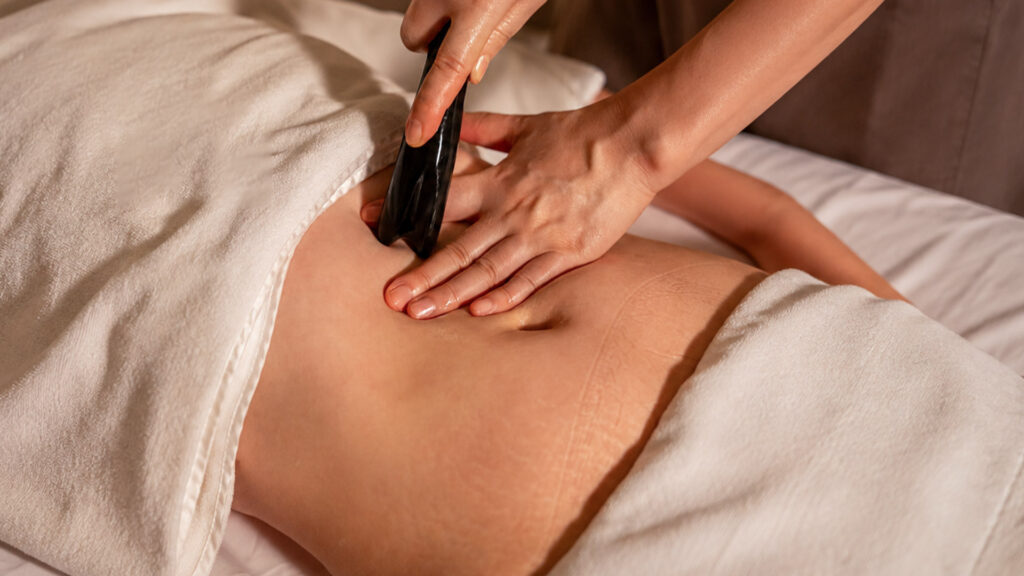
Bojin (撥筋) is a Traditional Chinese Medicine body treatment that uses specialised tools to stimulate acupressure points and meridian channels throughout the body. The tools are typically crafted from ox horn or jade, materials traditionally associated with healing properties in TCM.
The therapist applies varying pressure and rhythm along the body’s meridian pathways to:
- Release blockages in the meridian channels
- Restore the flow of qi and blood
- Support the body’s natural regulatory systems
The word “Bojin” refers to the movement of tendons and sinews along these channels. The treatment is based on the principle that unrestricted qi flow through the meridians supports physical health and internal balance.
When qi flow becomes blocked through:
- Stress and overwork
- Injury and physical strain
- Lifestyle habits and fatigue
The body may respond with tension, pain, imbalance, and low energy levels. Bojin works to address these blockages directly at the level of the meridian channel rather than only focusing on the symptom itself.
What Happens in a Session?
Most people’s first question is practical: what does the session actually involve? Before any bodywork begins, the therapist conducts an assessment. The discussion usually covers:
- Physical history and lifestyle habits
- Areas of tension and discomfort
- Current health concerns and stress patterns
This assessment determines:
- Which meridian channels require attention
- Which Bojin techniques and tools will be used during the session
The assessment matters because Bojin is not a fixed sequence applied identically to every client. The treatment is adapted according to what the body presents on the day.
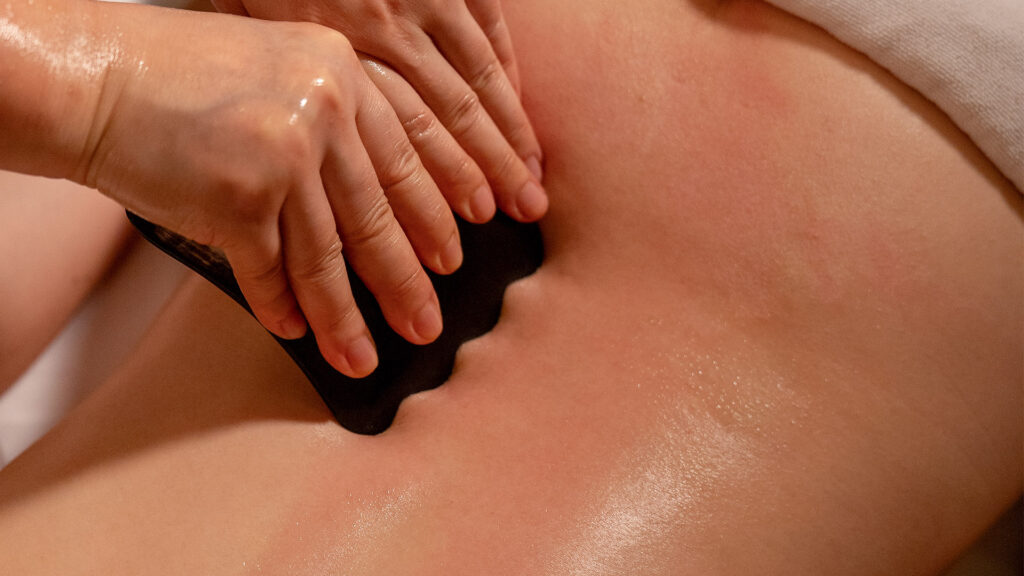
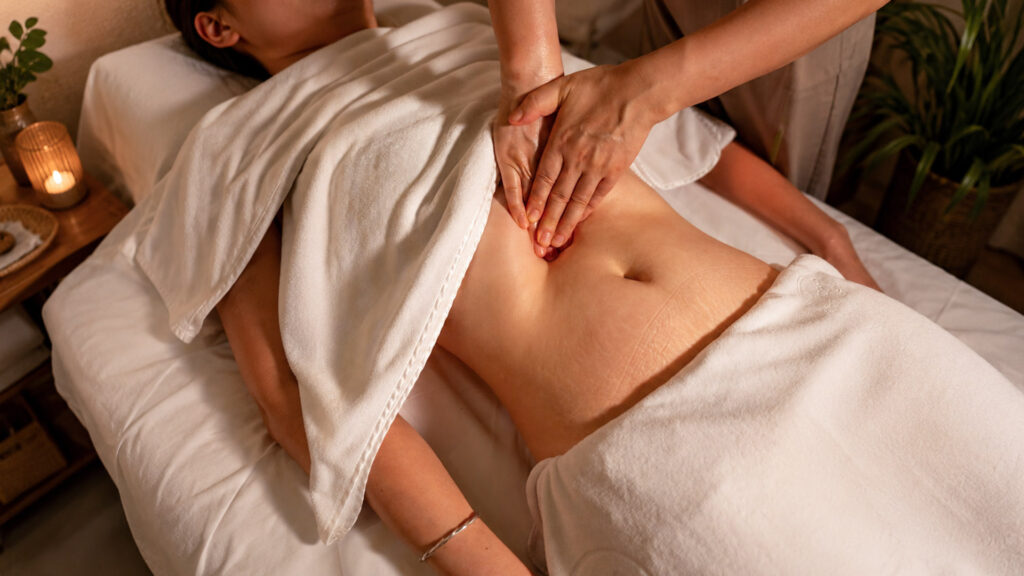
Once the target areas are identified, therapeutic oil is applied to the skin. The therapist then works along the selected meridian pathways using the Bojin tool.
The session combines several movements, including:
- Pushing and prodding to release knots in the muscle fascia
- Kneading to soften tight tendons and sinews
- Scraping motions to clear stagnation and stimulate blood flow
The treatment is generally pain-free. If the therapist encounters a heavily blocked area, you may feel stronger pressure in that region, though this differs from the discomfort associated with deep tissue massage.
During the session:
- Pressure is adjusted based on the body’s response
- Therapists monitor areas of blockage and sensitivity
- The body gradually relaxes as circulation improves
Most clients describe leaving the session feeling lighter, less tense, and physically more settled than before the treatment.
The effects also tend to build progressively across sessions. A first session often provides immediate relief in areas with noticeable blockage, while follow-up sessions usually work deeper once the initial stagnation has already been cleared.
Many people who try Bojin massage in Singapore once often return for:
- Ongoing tension management
- Circulation support
- Stress relief and body maintenance
At Qi Health, Bojin treatments are available for:
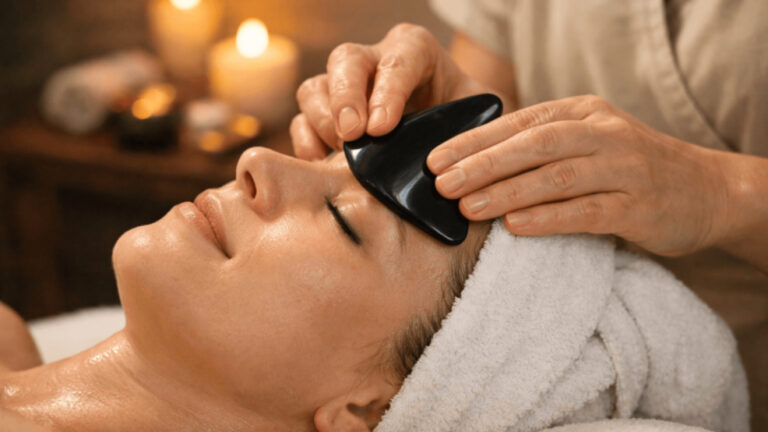
- The face and head
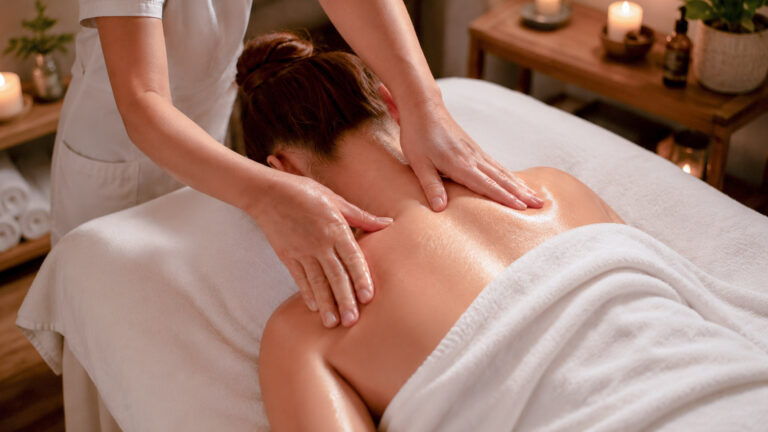
- The back and shoulders
- Full-body treatment sessions
The back and shoulder treatment focuses particularly on the:
- Small Intestine meridian
- Bladder meridian
- Triple Burner meridian
These pathways commonly carry tension linked to desk work, posture strain, and daily stress among Singapore-based clients.
“Bojin works along the body’s meridian network, using targeted tool pressure to release blockages and restore qi and blood flow across the affected pathways.”
How It Compares to Other Chinese Massage Treatments in Singapore?
| Treatment | How the Treatment Works | How It Differs from Bojin | Who It May Suit Better |
| Tui na | Tui Na is a Traditional Chinese Medicine massage using manual manipulation on the body’s meridians through hand techniques. | Bo Jin uses special instruments in addition to the hand techniques, providing more focused pressure on specific acupoints and greater penetration into the fascial meridians. Both have common TCM principles based on meridians. | Individuals interested in a more traditional Chinese massage using hand techniques. |
| Gua sha | Gua sha uses broad scraping strokes on oiled skin to stimulate circulation and clear surface stagnation. | Bojin applies more targeted and point-specific pressure while reaching deeper into the muscle fascia and meridian channels. The two treatments can also complement each other within a wellness routine. | People focusing on surface circulation, mild tension, or lighter scraping-based bodywork. |
| Fascia knife massage (Jin Mo Dao) | The fascia knife treatment directly affects the myofascial layer of connective tissue to release adhesions and return the range of movement. | The Bojin treatment acts on the meridian system using the fascia as part of the route, but does not apply the same technique for structural adhesion release. Fascia knife massage is more structurally focused, while Bojin is more systemic and circulation-oriented. | People with specific localised restrictions, chronic stiffness, or structural movement limitations. People with systemic tension, energy depletion, or circulation concerns often respond better to Bojin. |
The Meridian System and Why is It Important?
To understand what Bojin massage Singapore is actually doing, it helps to understand the TCM framework it operates within. The meridian system is a network of 12 primary channels through which qi and blood circulate throughout the body. These channels connect:
- The body’s surface to its internal organs
- Tissues, joints, and organ systems within one integrated network
- Physical symptoms with emotional and systemic patterns
Each meridian is associated with:
- A specific organ system
- Particular physical functions
- Certain emotional states and responses
This is why Bojin massage Singapore sessions do not only address the area where discomfort appears. The treatment also works on the meridian channel running through that area and the systems connected to it elsewhere in the body.
When a meridian channel becomes obstructed, the effects may extend beyond the local area.
For example:
- A blockage in the Bladder meridian running along the spine may contribute to lower back stiffness, fatigue, and disrupted sleep
- A blockage in the Liver meridian running through the inner leg and chest may contribute to irritability, muscle tightness, or menstrual irregularity
Bojin targets these pathways with precision, releasing the specific blockages generating the symptoms rather than only addressing the surface presentation.
A 2024 systematic review published in Frontiers in Medicine examined meridian-based TCM interventions across randomised controlled trials.
The review found that stimulating meridian points produced analgesic effects through:
- Modulation of the immune system
- Release of endogenous opioid peptides
- Targeted stimulation of acupoints along meridian channels
Even though the research conducted on TCM did not specifically involve Bojin, the theoretical framework involved is basically similar to that of Bojin, whereby stimulation of specific meridians results in physiological changes.
“The meridian system connects the body’s surface to its internal organs, and stimulating points along these channels can produce effects well beyond the local treatment site.”
Who Tends to Respond Well?
Bojin massage in Singapore is not a treatment suited for a single condition. Its strength is breadth. This therapy acts on the entire energy system and not just on one specific organ or tissue system, thereby being able to help with more diverse physical ailments than other therapies that focus only on one particular tissue/organ.
People who tend to respond well often include those experiencing:
- Recurring fatigue that does not improve with rest
- Generalised muscle stiffness that shifts between different body areas
- Poor circulation and a sense of internal heaviness
- Bloating, disrupted sleep, and chronic low-level stress
These patterns often reflect a systemic meridian imbalance rather than a localised structural restriction. The treatment also suits people recovering from physical depletion, including:
- Post-natal recovery periods
- Extended phases of overwork and burnout
- Recovery following illness or prolonged fatigue
Bojin supports the body’s own regulatory mechanisms without placing deep physical pressure on already-depleted tissue.
Beyond physical tension, Bojin also carries emotional and mental wellness benefits. In TCM, the free flow of qi through the meridians is connected not only to physical health but also to:
- Mood regulation and emotional balance
- Mental clarity and energy levels
- Sleep quality and stress recovery
When meridian channels become blocked, the effects may extend to irritability, low energy, disrupted sleep, and emotional heaviness. Addressing these blockages can shift how the entire body feels, not only the areas experiencing pain or stiffness.
Many clients report:
- Improved mood after sessions
- Better mental clarity and relaxation
- Reduced physical and emotional heaviness
This is part of why this body treatment in Singapore often attracts repeat visitors looking for long-term wellness support.
People dealing with an active, localised structural restriction, such as a persistent muscle knot in one specific area, may respond better to fascia knife massage as a first treatment.
If you’re unsure where to begin:
- The Qi Health team can advise after a proper body assessment.
- Treatment recommendations are based on the body’s current condition.
- Additional wellness guidance is available through the Qi Health blog.
Is Bojin the Right Treatment for You?
Bojin Massage in Singapore is for those who have ailments that are related to the energy system of their body or circulation, but not because of any structural blockage. In case your tension keeps shifting, you find yourself constantly tired, and you have stress in your body as a physical feeling, then Bojin Massage helps in solving the issue through addressing the entire network.
It is a painless and non-intrusive therapy that is good both when taken only once or in a routine manner. In case you are suffering from both structural and systemic issues, then combining Bojin Massage with fascia knife massage will help.

FAQs
- How does Bojin massage work?
Bojin is a Traditional Chinese Medicine treatment, which involves stimulation of the acupuncture points and meridians of the body using ox horn or jade devices. Pressure, scraping, and kneading are done on the body meridians to unblock any blockages, enhance the flow of qi and blood, and achieve physical equilibrium. Each treatment starts with an initial body examination and is custom tailored to your individual needs.
- Is Bojin treatment painful?
This type of therapy is not usually painful. However, when there is much blockage in one of the meridians, more pressure will be applied to that area. This is not the same as pain.
- What is the difference between Bojin therapy and other Chinese massage therapies in Singapore?
Bojin therapy differs from other forms of Chinese massage practiced in Singapore such as the tui na which involves massage using the hands, the Gua sha, which is performed using a scraping tool for circulation on the surface and deep tissue massage. The Bojin massage therapy involves the use of specialised tools for getting into specific acupoints and fascial lines unlike other types of massage.
- How many sessions will it take before seeing any difference?
While some people will be able to feel a big difference even after just one session mainly in terms of energy and overall tension, it usually takes four to six sessions for a person who has been trying to address an ongoing issue like fatigue or muscle stiffness.
- Is it possible to include Bojin treatment along with fascia knife massage?
Yes. These procedures affect different areas of one’s health and complement each other. While Bojin concentrates on the meridians and the flow of energy in the body, the fascia knife massage procedure targets the problems in the connective tissues of the body.
Conclusion
Bojin has evolved from being a form of special TCM treatment to being one of the most sought after health solutions in Singapore, and there is good reason why that is the case.
For instance, it takes care of the root cause of the problem in the form of recurring stress, tension, and low energy and does not seek to address the symptom every time that it arises. It does not involve a prior diagnosis, and all you need is just one session for an assessment of your response.
Qi Health was founded in Singapore, and they provide wellness services through Traditional Chinese Medicine which revolves around blood circulation improvement, muscle recovery, stress reduction, and body care. Through our three clinics in Singapore, we offer treatments in the form of Bojin massage, Gua Sha, Tui na, fascia knife massage, Moxibustion, Head Spa, and Deep Tissue Massage.
Each Qi Health session starts with an assessment that is required to know what your body requires at present so that the method can be chosen accordingly. People who are new to Traditional Chinese Medicine wellness treatments and those who wish to add something specific to their current wellness treatment can read more on the Qi Health blog.
If you are new to TCM wellness or you wish to enhance your current TCM wellness treatments, then each of the sessions at Qi Health starts with an assessment so that your therapist knows what your body requires at the moment.
Related Articles