Key Takeaway
- After a full workday, orchard massage options range from deep tissue work to TCM-based treatments like Bojin and acupressure, each suited to different types of tension.
- Desk workers in Singapore commonly experience neck and shoulder discomfort linked to long hours of screen use and sitting in the same position.
- A body massage in Singapore can help release built-up tension, improve blood circulation, and help the body recover after a long sedentary day.
- Qi Health’s Orchard outlet is open daily from 10:30 am to 8:30 pm, with two locations along Orchard Road for convenience.
- Choosing the right treatment depends on whether your tension is spread across the whole body or concentrated in one specific area.
Introduction
By the time 6 pm rolls around in Orchard, most people’s shoulders are somewhere around their ears. Eight hours of screen time, back-to-back meetings, and a chair that wasn’t designed for long days tend to do that. The Orchard area gets a lot of that end-of-day foot traffic, not just for food or shopping, but increasingly from people who want to actually do something about the tension before heading home.
The challenge isn’t finding an orchard massage option. There are plenty along the Orchard Road stretch. The challenge is knowing what kind of treatment suits what you’re actually feeling, so you don’t walk out 60 minutes later having spent money on something that didn’t address the right problem.
This guide is written for working adults who want a practical answer to that question. It covers what types of tension typically build up during a desk-heavy day, which treatments are best suited to different situations, and what Qi Health’s Orchard outlet offers for people wanting a post-work session. The aim is to give you enough information to walk in with a clear idea of what to ask for.
Why Does Desk Work Leave Your Body Feeling So Tight?
Most people intuitively know that sitting at a desk all day isn’t great for the body. But the reason it creates tension is worth understanding, because it affects which treatment will actually help.
When you hold the same posture for a long time, the muscles in your neck, shoulders, and upper back stay contracted without getting a chance to release. Blood flow to those areas slows down. Over the course of a workday, that produces the familiar feeling of stiffness, heaviness, and sometimes a dull ache that spreads from the neck down to the upper back.
A 2024 study involving Singaporean working adults found that those experiencing neck and shoulder pain reported significantly more daily screen time than those without pain, averaging 5.37 hours of smartphone use per day versus 4.46 hours. They also exercised less, averaging 2.10 days of activity per week compared to 2.93 days in the group without pain.
This tension doesn’t tend to fully clear overnight. It builds week on week, which is why many people notice their bodies feeling worse on Thursday than they did on Monday. A regular body massage in Singapore is one practical way to interrupt that cycle before it becomes a more persistent problem.
“Body tension from desk work builds up gradually across the week. Addressing it regularly tends to work better than waiting until it becomes hard to ignore.”
What Treatments Are Available for Post-Work Tension?
Not every massage addresses the same problem. Here’s how the main options at Qi Health compare for someone coming in after a standard office day.
Deep Tissue Massage
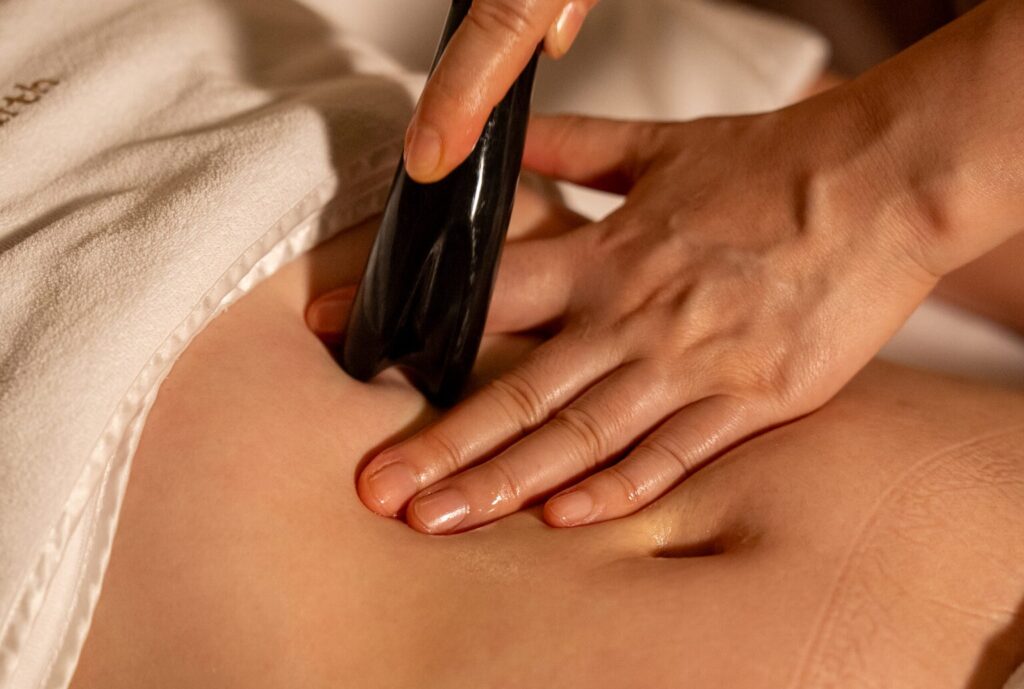
Deep tissue massage uses firm, slow pressure to reach the deeper layers of muscle. It’s designed to release tight knots and areas of restriction that lighter pressure won’t reach. This is a good choice if you have a specific spot that’s been bothering you, like a locked shoulder, a stiff lower back, or a neck that doesn’t turn freely.
At Qi Health, deep tissue massage begins with a short assessment before the session starts. The therapist checks your posture and movement patterns and asks about your daily routine, so the pressure can be applied where it’s actually needed rather than using a one-size-fits-all approach.
Acupressure Massage
Acupressure is a Traditional Chinese Medicine technique that applies firm pressure to specific points on the body. These points sit along pathways that connect different parts of the body’s muscle and organ systems. In plain terms, pressing on the right points can ease tension and improve blood flow in areas that feel stiff or heavy.
It’s a good option if your tension isn’t concentrated in one spot but is spread across the whole upper body. An acupressure massage at Qi Health works across the full body rather than targeting a single area, which suits people who carry stress throughout their neck, shoulders, and back simultaneously.
Aromatherapy Massage
An aromatherapy massage uses gentle massage strokes alongside essential oils that are absorbed through the skin. Different oils have different properties. Some are more calming, others help with circulation or physical tension.
If your end-of-day state is as much about mental stress and being wound up as it is about physical tightness, aromatherapy tends to be a better starting point than deep tissue. The session is gentler and focuses as much on helping you decompress mentally as on releasing the physical tension.
Bojin and Gua sha
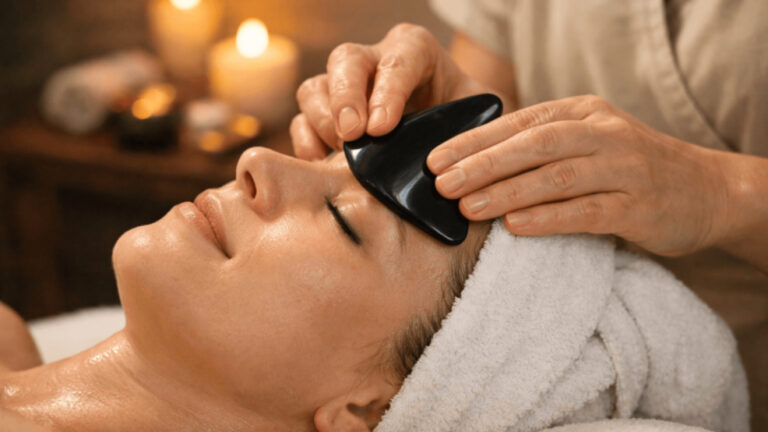
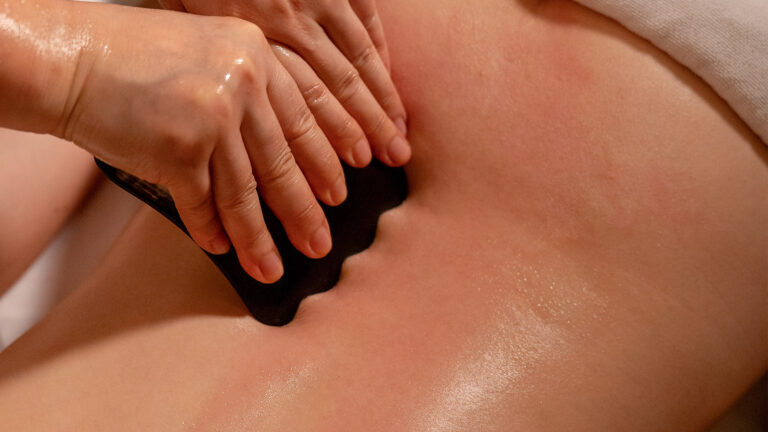
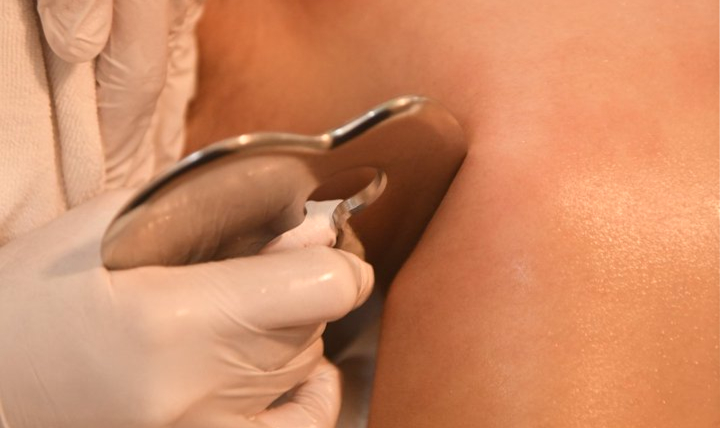
Bojin and gua sha are both rooted in Traditional Chinese Medicine. Bojin uses a specialised tool, typically made from ox horn or jade, to work along specific pressure points and pathways across the body. The goal is to get the body’s energy and blood circulation moving again through areas that have become sluggish or blocked. Gua sha uses a smooth-edged scraping tool on oiled skin to stimulate blood flow near the surface, which helps clear the kind of heaviness and dullness that builds up from prolonged stress and poor circulation.
Both treatments are well-suited for people managing general fatigue and recurring tension rather than a specific injury. They’re also a good option if you’ve tried standard massage and found the results didn’t last.
“The right post-work treatment depends on where your tension sits, whether it’s stuck in one spot or spread across your whole body, and how long it’s been building up.”

Practical Things to Know About Qi Health Orchard
A few practical details make a real difference when you’re choosing where to go after work.
Locations
Qi Health has two outlets along Orchard Road. One is at 402 Orchard Rd, #03-17 Delfi Orchard. The other is at 277 Orchard Rd, Orchard Gateway, #03-07. Both are walkable from Orchard MRT, which makes a post-work visit easy to fit into most commutes home.
Operating Hours
Both outlets are open daily from 10:30 am to 8:30 pm. Arriving between 6:30 pm and 7:30 pm gives you enough time for a full 60-minute session before closing. No need to leave work early.
Booking
Appointments are made via WhatsApp, which is quicker than most online booking systems and means you can confirm a slot on the way to the outlet.
Assessment first
Every session at Qi Health starts with a short check-in. The therapist asks about your current physical state and where you’re experiencing tension. This might feel like a small thing, but it matters. Two people walking in with “shoulder tension” can need quite different treatments depending on how long the problem has been there and how it’s presenting. The assessment makes sure the session is actually suited to what you need that day, rather than a standard sequence applied to everyone regardless of their situation.
What to Expect During Your First Visit
If you haven’t been to a TCM-based spa before, the experience is a bit different from a standard massage.
After your arrival and the short assessment, the therapist applies oil to the target area and begins working through the treatment. The pressure, tools, and techniques vary depending on which treatment you’ve chosen. For a Bojin session, you’ll feel the pressure of a smooth-edged tool working along specific points on your back or shoulders. For deep tissue, it’s firm hand or elbow pressure going deeper into the muscles. For acupressure, it’s targeted compression at specific points across the body. For aromatherapy, it’s lighter, flowing strokes with scented oil that help you mentally switch off from the day as much as physically unwind.
Most sessions run 60 to 90 minutes, depending on the treatment booked. Pressure is adjusted throughout based on how you’re feeling and how your body responds. You can and should speak up if something feels too intense or not intense enough. Good therapists adjust as they go, and you don’t have to endure discomfort for the treatment to be effective.
Afterwards, most people feel physically lighter and notice a reduction in the stiffness they came in with. If you’ve had areas of deep tension worked on, you might feel some mild soreness the next day. This is normal and usually clears within 24 hours. It’s a sign that the muscle or tissue in that area responded to the treatment, not that something went wrong.
For best results, regular sessions consistently work better than one-off visits. The tension that builds from a full working week doesn’t fully release in a single session, but it does shift noticeably with consistency. Many people find that booking the same time slot each fortnight removes the hassle of scheduling and makes it easier to actually follow through.
For a fuller breakdown of what to look for before booking, the Qi Health blog on choosing a spa covers seven practical things worth checking.
Is an After-Work Orchard Massage Worth It?
For most desk workers, the short answer is yes. Sitting for long hours without movement creates real physical tension that doesn’t always resolve with rest alone. A post-work massage in Orchard is one of the more practical ways to address that tension consistently, without needing to significantly change your evening routine or add a big commitment to your week.
Qi Health’s Orchard outlets offer a range of treatments, from full-body massage options to more targeted deep tissue and TCM-based sessions. The right choice depends on what you’re feeling. If you’re not sure, the therapist assessment at the start of the session helps point you in the right direction.
Frequently Asked Questions
1. What orchard massage options are available for after-work visits?
Qi Health has two Orchard outlets open daily until 8:30 pm. Treatments include Bojin massage, gua sha, acupressure, aromatherapy, deep tissue, and detox massage. Booking is done via WhatsApp. The range covers both TCM-based and conventional massage approaches, so the session can be matched to your specific concern.
2. Which massage is best for neck and shoulder tension from desk work?
It depends on where the tension sits. If you have a specific tight spot that’s been there for a while, deep tissue massage is a good fit. If the tension is more spread out across your neck, upper back, and shoulders, Bojin or acupressure works better because they address the body more broadly rather than one concentrated area.
3. How often should I get a body massage in Singapore for work-related tension?
Once every one to two weeks is a practical rhythm for most desk workers. Tension from a full working week tends to build faster than it releases on its own, so regular sessions help keep it manageable rather than letting it accumulate into something harder to shift.
4. What does a full-body massage in Singapore cover?
A full-body massage typically covers the back, shoulders, neck, arms, legs, and often the head, depending on the treatment type. At Qi Health, the specific areas and techniques vary depending on which treatment you book. Your therapist can walk you through what a session covers before it starts.
5. What is a Chinese massage in Singapore and how does it differ from a standard massage?
Chinese massage in Singapore, including Bojin, gua sha, and acupressure, uses techniques from Traditional Chinese Medicine. These work on specific pressure points and pathways across the body rather than just the muscles. The goal is to improve the flow of energy and blood circulation throughout the body, not just release muscle tension in one area. It tends to suit people whose tension feels whole-body and recurring rather than isolated to one spot.
Body tension from desk work doesn’t clear itself. Left alone, it tends to stack up week by week until it becomes a persistent ache that’s harder to shift. A regular post-work orchard massage is a straightforward way to stay on top of it, and Qi Health’s two Orchard Road outlets make it genuinely convenient after a long day. Sessions are available daily until 8:30 pm, treatments are matched to your condition rather than applied as a generic routine, and the range covers everything from a relaxing aromatherapy session to targeted deep tissue or TCM-based work. If you’ve been putting it off because you weren’t sure what to book, the short assessment at the start of each session takes care of that. Book your next session through the Qi Health Orchard contact page or send them a message on WhatsApp.
Related Articles